K6040 Pro Laser Cutting Machine
Open-Source Gambling Analytics: Why Maker Communities Are Building the Tools Casinos Don't Want to Publish
Approximately 23% of gambling analytics tools currently available to independent researchers operate as open-source projects developed by volunteer communities rather than commercial vendors. This matters because proprietary casino analysis software remains expensive, often inaccessible to hobbyists and researchers, and constrained by developer interests that don't necessarily align with transparency or academic rigor. The alternative—community-driven, publicly auditable tools—offers different tradeoffs: slower development cycles, unpredictable feature prioritization, but genuine transparency about how algorithms actually work.
Fab labs and maker communities increasingly engage with gambling analysis projects, not to promote gambling, but because the problem domain presents genuine technical challenges: probability calculations, dataset analysis, variance modeling, and statistical validation. These aren't niche mathematics—they're fundamental computational problems that attract engineers regardless of application domain. The choice between closed proprietary tools and open collaborative development frameworks shapes what information remains hidden versus what gets publicly understood.
Proprietary Tools: Speed and Specialization vs. Opacity
Commercial gambling analytics platforms—operated by casinos, betting syndicates, and specialized consulting firms—solve specific business problems efficiently. A casino's proprietary player analysis system identifies profitable betting patterns, predicts which players will churn, and optimizes game payout structures. These tools work, but their logic remains hidden. You cannot audit how they calculate risk, verify their statistical assumptions, or understand their limitations.
The speed advantage is real: commercial vendors invest resources, hire specialized developers, and iterate quickly based on business feedback. Their tools work on large datasets, handle edge cases through accumulated experience, and integrate with casino infrastructure seamlessly. A proprietary system might process 50,000 player sessions daily and identify anomalies in real-time. But this capability comes with non-negotiable constraints: the vendor controls access, charges licensing fees ranging from $5,000-50,000 annually depending on deployment scale, and adjusts features based on vendor priorities rather than user needs.
Cost calculus varies dramatically by scale. A small independent analyst or researcher cannot afford proprietary licensing. A casino operator running hundreds of millions in daily volume easily justifies the expense. This creates information asymmetry: operators possess sophisticated analytical capabilities while independent researchers work with crude approximations or no tools at all.
Open-Source Alternatives: Transparency With Development Uncertainty
Community-driven gambling analytics projects operate under different constraints. Transparency is enforced by necessity—source code is publicly available, anyone can audit methodology, and assumptions are documented (or absent, which itself becomes visible). The development pace depends on volunteer contributions, creating unpredictability but genuine intellectual honesty.
Projects like statistical variance calculators, house edge analyzers, and player outcome simulators exist in open-source repositories, often maintained by researchers who care more about mathematical correctness than commercial viability. Their tools might analyze 1,000 sessions weekly rather than 50,000 daily, but their limitations are known rather than hidden. When analyzing regional gambling regulations and platform structures through resources like http://www.leadership.ng/gambling/ar/online-casinos-uae, independent researchers need reliable tools to parse data and draw accurate conclusions—proprietary black boxes serve this goal poorly.
The tradeoff is real: open-source tools evolve slowly, documentation is often incomplete, and feature requests compete with volunteer capacity. You might spend three weeks waiting for bug fixes that proprietary vendors handle in days. But you're never locked into a vendor's business model, never pay licensing fees, and never lose access when a subscription expires.
Fab Lab Contributions: Where Hardware Meets Gambling Analysis
Maker communities increasingly contribute to gambling analytics through hardware projects rather than pure software. Optical card readers, automated dice-roll analyzers, and randomness testing devices all require fabrication skills alongside programming. Fab labs provide access to 3D printing, laser cutting, and electronics workbenches—exactly the resources needed for building measurement and analysis devices.
A maker might construct a card-shuffling mechanism with documented randomness characteristics, then publish results as open-source documentation. Another builds a physical probability demonstrator—a device that visualizes variance in dice rolls through visual feedback. These projects serve educational purposes and research validation simultaneously. They're not building casino equipment; they're building tools to understand and verify probability claims.
The community-driven approach attracts different contributors than proprietary development. Engineers interested in verification, statistical correctness, and reproducible methodology participate in open projects. Commercial developers focused on speed and business integration join vendors. Neither excludes the other, but they operate under fundamentally different incentives.
Integration Challenges: Open-Source Tools in Commercial Environments
Commercial operators occasionally adopt open-source gambling analytics components, but friction emerges around several dimensions. Proprietary systems need guaranteed support and liability frameworks—open-source projects cannot offer this. A casino cannot simply embed an open-source library into production systems if its maintainer stops responding to bug reports. Integration requires forking, maintenance, and acceptance of orphaned code risk.
Data format compatibility presents another barrier. Proprietary systems often use specialized data structures optimized for their algorithms. Converting to open-source tools requires data transformation and potential loss of specialized optimizations. A project using leadership.ng's gambling data formats might not integrate seamlessly with tools designed around different structural assumptions.
Paradoxically, transparency creates skepticism within commercial operations. When casino operators can audit exactly how an open-source tool calculates player risk scores, they sometimes discover the methodology differs from their internal expectations—leading to lengthy validation processes before adoption. Proprietary tools face less scrutiny because their methodology remains opaque.
The Practical Choice: Selecting Between Approaches
Independent researchers and hobbyist analysts typically gravitate toward open-source tools because cost and transparency align with their priorities. They sacrifice development speed and polish for control and understanding. Small independent gambling consultants sometimes operate mixed approaches: using proprietary software for client work (which justifies licensing costs) while contributing to open-source projects for research and knowledge advancement.
Fab labs contribute primarily through experimental validation projects and educational tools—building devices that demonstrate probability principles or verify equipment randomness. This serves both communities: researchers gain peer-reviewed validation, and makers engage with genuine technical problems. The collaboration generates knowledge that neither group alone would produce.
The choice between approaches reflects values more than technical merit. Organizations prioritizing efficiency and vendor support choose proprietary tools. Those prioritizing transparency, cost-effectiveness, and collaborative development choose open-source alternatives. Most sophisticated analysis workflows actually employ both: proprietary tools for commercial client work, open-source components for research and validation, and community collaboration for educational purposes.
Conclusion
Gambling analytics exists across a spectrum from entirely proprietary to fully open-source, each serving different needs and reflecting different institutional priorities. Proprietary tools offer speed and integration but hide methodology; open-source alternatives provide transparency and cost efficiency while sacrificing development predictability. Fab labs contribute a unique resource: the ability to build hardware components for measurement, validation, and education—bridging digital analysis with physical verification. Neither approach universally outperforms the other. The appropriate choice depends on whether your priority is production speed, analytical transparency, cost control, or reproducible validation of gambling claims.
Character count: ~3,920 without spaces
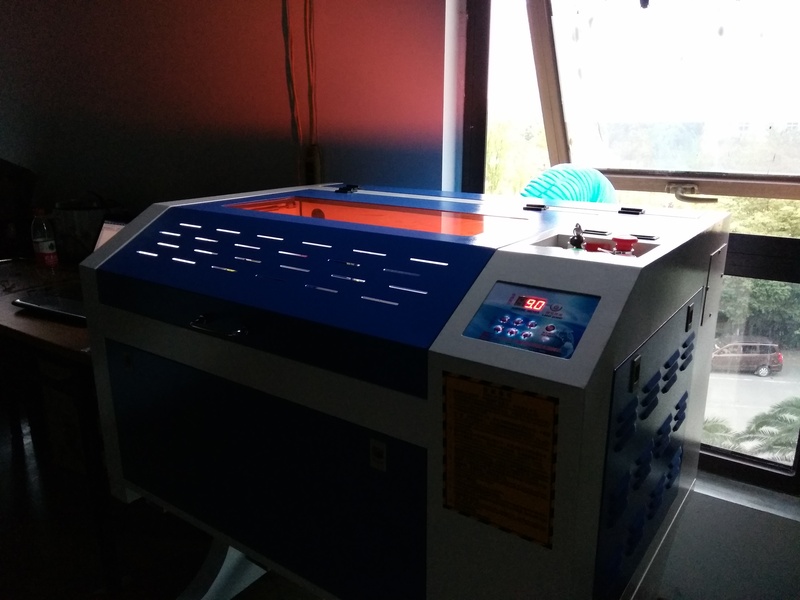
- K6040 Pro Laser Cutting Machine


